
So Your Parents Are Getting Older. Here’s the Stuff Nobody Told Us About.
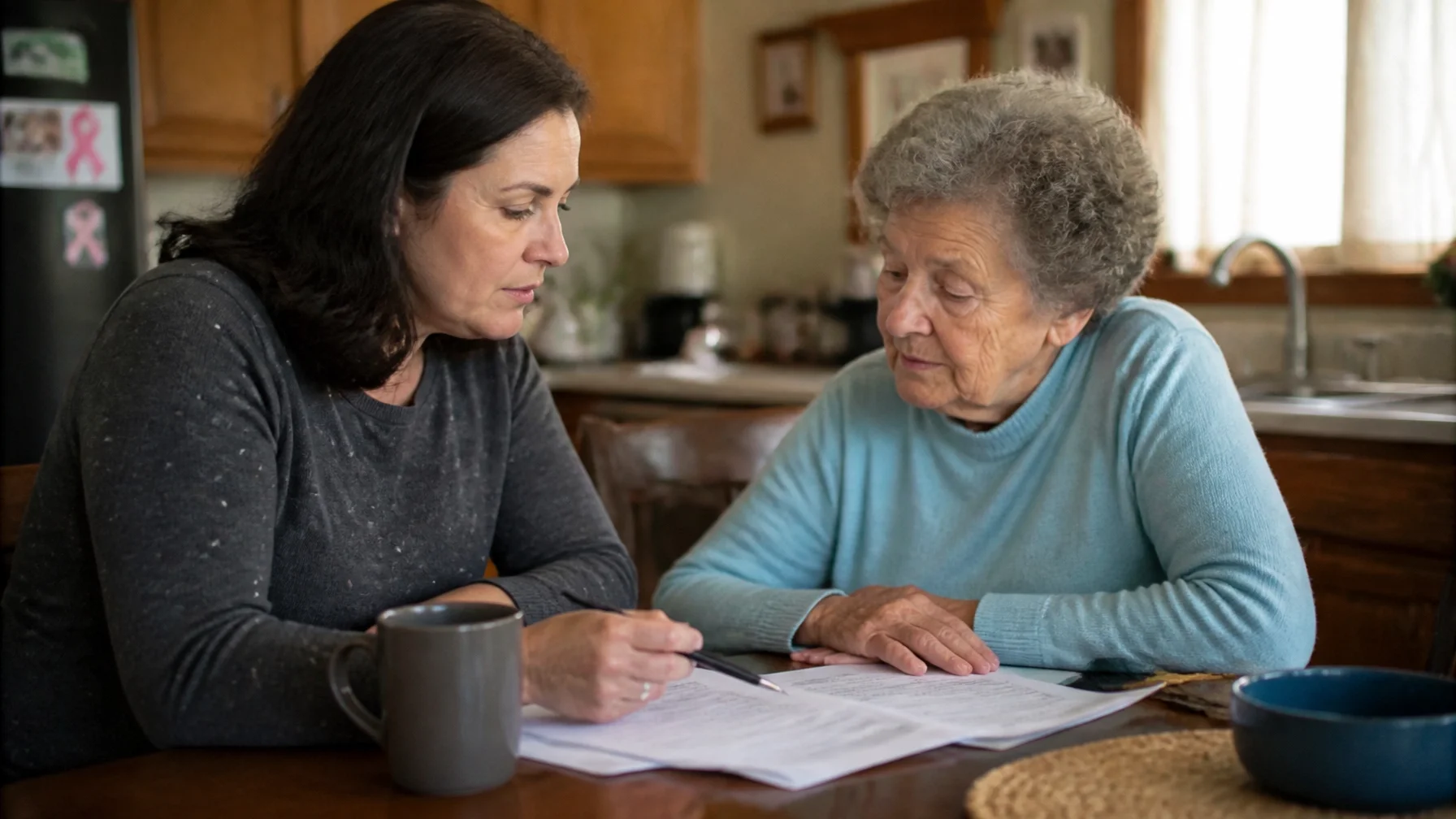
It starts small. A call about the Netflix password. A comment about the lawn not getting mowed. A stack of mail that seems weirdly taller than it should be.
And then suddenly you're the one making the pharmacy run, calling the insurance company, and trying to remember which doctor handles what. Then comes the moment nobody warns you about: the doctor won’t talk to you.
That’s when this whole thing changes shape. You’re already doing the work, but you don’t have the permission. And caring for aging parents stops feeling like “helping out” and starts feeling like a part-time job with terrible onboarding.
The moment you become the project manager
A lot of family caregiving begins in the land of little stuff. You reset passwords. You check the fridge. You notice the same unpaid bill sitting on the counter for a week. You tell yourself it’s probably fine.
Then one appointment turns into three. One missed payment turns into a stack of unopened envelopes. One fall, one hospital stay, or one scary diagnosis later, you’re not just helping. You’re coordinating.
That shift matters because the systems around your parent do not care that you’re the loving daughter, son, niece, or favorite human. Hospitals, banks, insurance companies, and care facilities want paperwork. If your parent never signed the right documents while they were still able to understand what they were signing, you can find yourself in the maddening position of doing everything and being authorized for nothing.
“Legal authority has to be assigned while capacity still exists. Care stops being about effort and becomes about permission the moment a crisis hits.”
That word “capacity” just means your parent is still able to understand what they’re signing and what it does. If you wait until dementia has progressed or after a major medical event, your options can shrink fast. What could have been one honest conversation at the kitchen table can turn into a much bigger court process later.
The paperwork you actually need
No, you do not need to become a paperwork goblin. But there are a few documents that make a huge difference, and they work best when they’re signed before anyone is in crisis mode.
A medical power of attorney lets your parent name the person who can make health decisions if they can’t speak for themselves. A HIPAA authorization is different. That one gives doctors and hospitals permission to share medical information with you. Translation: without it, even getting updates can become a weirdly exhausting game of “sorry, we can’t tell you that.”
You also want a financial power of attorney. That lets someone handle bills, banking, taxes, and other financial tasks if your parent can’t manage them on their own. And then there’s the advance directive, sometimes called a living will, which is where your parent puts their wishes in writing for serious end-of-life care decisions.
None of this is about being dramatic. It’s about making sure you’re not trying to guess what your parent wants while also arguing with a receptionist and hunting for their account number.
And just to say the quiet part out loud: doing this early is kinder. Kinder to your parent. Kinder to you. Kinder to everyone who would otherwise end up making emergency decisions in a hospital hallway while running on vending machine coffee and adrenaline.
Care has levels, and it rarely moves in a neat little line
Most people picture aging at home until the very end, maybe with a little extra help here and there. Sometimes that happens. A lot of times, though, care moves in stages, and not always in the order you expected.
At first, your parent may be totally fine in independent living, which is more about convenience and community than hands-on care. Think fewer household chores, more support around the edges. Then you may hit assisted living, where help with daily tasks like meals, bathing, or medications starts to matter more.
If memory issues become part of the picture, memory care is a different level entirely. It’s built for safety, structure, and support for people dealing with dementia or Alzheimer’s. And skilled nursing is what most people mean when they say nursing home, where someone needs round-the-clock medical care, not just help around the house.
Here’s the part people learn the hard way: waitlists are real. Good places fill up. The nice room your friend’s mom got six months ago may not be there when your family suddenly needs it next Tuesday.
Tour before you need it.
Seriously. Even if it feels premature. Even if your parent rolls their eyes and says, “I’m not ready for that.” You’re not making a decision by looking. You’re buying yourself information, which is one of the few things in this process that actually lowers the panic later.
The middle-class care gap is brutal
This is the part that makes people want to scream into a throw pillow.
A lot of families assume Medicare will cover long-term care. Whaaat? No.
Medicare is mostly health insurance for older adults. It can help with hospital care, doctor visits, and short rehab stays. It does not generally pay for long-term custodial care, which is the day-in, day-out help with bathing, dressing, eating, and supervision that many older adults eventually need.
Medicaid is the program that can cover long-term care, but to qualify, you usually have to have very limited income and assets. Which means a whole lot of middle-class families land in the most maddening spot imaginable: too much money to qualify for Medicaid, not enough money to comfortably pay $10,000 a month for care.
That’s the gap.
And what do people do in the gap? A lot of them spend down. Meaning they burn through savings, sell assets, and slowly watch the financial cushion disappear until they finally qualify for help.
This is also why families end up cobbling together solutions that sort of work until they really, really don’t. A little unpaid help from you. A little paid help from someone else. A lot of hoping nobody falls, wanders, forgets the stove, or ends up back in the hospital.
“Caregiving is a series of small decisions made early, or a series of emergency decisions made later.”
That quote is the whole game, honestly.
Home care can help, but it comes with fine print too
A lot of people want to keep a parent at home as long as possible. That instinct makes sense. Home is familiar. Home feels safer emotionally. Home is where the coffee mug is in the right cabinet and the dog knows where to sit.
But home care has its own legal and financial reality check.
You can go through an agency, which usually means they handle scheduling, screening, and some of the employment headaches. It often costs more, but there’s more structure around it. Or you can hire someone privately, which can look cheaper on paper until you realize you may now be an employer.
That means taxes. It can mean insurance issues. It can mean worker’s comp questions if someone gets hurt on the job. It can mean liability if things go sideways.
There’s also a softer risk that doesn’t get talked about enough: financial exploitation. Not every helper is a problem, obviously. Most people doing care work are doing hard, decent work. But when one person has a lot of unsupervised access to an older adult, their home, and their accounts, the opportunity for trouble is there.
This isn’t a cue to panic. It’s a cue to put guardrails in place. Oversight. Backups. Clear boundaries. More than one set of eyes on what’s happening.
Because “keep them at home” is not one decision. It’s a chain of decisions. And the safer that chain is, the longer home may stay workable.
The “Where Things Are” binder is the least glamorous, most useful thing you can do
This may be the most practical tip in the whole conversation.
Make a “Where Things Are” binder. Or a folder. Or a shared digital file if your family is actually good at that kind of thing. The point is not the format. The point is that when something happens, you are not playing household detective at 11:40 p.m.
You need the boring stuff. Account information. Insurance policies. Medication lists. Doctors’ names. Passwords. The name of the plumber. The neighbor with the spare key. The car title. The monthly bills. The online login that only your dad somehow knows by heart and never wrote down.
This is the secret weapon because it saves time, and time is the one thing you usually do not have when a crisis hits.
It also reduces conflict. When everyone knows where the information lives, you get fewer frantic group texts, fewer accusations, and fewer moments of “I thought you were handling that.”
For more on getting your documents organized, check out Love Turned Into Paperwork: Estate Planning Documents.
Small wins that buy you time
Not every solution is dramatic. Some of the best ones are weirdly boring.
Grab bars in the bathroom. Knobs on the stove that are easier to manage or safer to turn off. A medication dispenser that beeps instead of relying on memory. Fall alerts. Better lighting. Fewer rugs waiting to become enemies.
These things do not solve everything.
But they can buy you time. And in caregiving, time is gold.
If you want a practical place to start, grab the Aging Parent Checklist. It can help you figure out what conversations, documents, and next steps you may want to tackle while things are still calm-ish.
🎙️ Listen to this episode of Life Is Legal wherever you get your podcasts. If you found it helpful, leave a review, subscribe, and share it with someone who needs to know this stuff.
Want more real-world legal literacy delivered to your inbox? Sign up for Brooke's newsletter at https://brooke-hardie.kit.com/newlsetter
This post is for educational purposes only and does not constitute legal advice. Laws vary by state and situation. For advice specific to your circumstances, consult a licensed attorney in your area.
